Ray-Ban
Founded 1936 · Rochester, New York, United States · Bausch & Lomb
Ray-Ban was created by Bausch & Lomb in 1936 on a commission from the US Army Air Corps: pilots needed a lens that would cut the glare at altitude. Out of it came the Aviator and, fifteen years later, the Wayfarer — the two most recognisable pairs of sunglasses there are.
History
The US Army Air Corps asked Bausch & Lomb, the optical maker in Rochester, for a lens to protect against glare in flight. In 1936 the house launched the Aviator, with its green teardrop lens. The name — "ray ban", a barrier to rays — says exactly what it does. In 1952 came the Wayfarer, designed by Raymond Stegeman, breaking with metal in favour of acetate: the first model that reads as a design object rather than as equipment. Both went through decades of ups and downs — the Wayfarer came close to being discontinued in the eighties and was saved by film placement — until Bausch & Lomb sold the brand to Luxottica in 1999. In 2021 the house launched a line with an integrated camera together with Meta.
Iconic models
Aviator (1936)
The original air force commission. The teardrop lens was born to cut glare at altitude.
Wayfarer (1952)
Designed by Raymond Stegeman in acetate. The first pair that was a design object before it was equipment.
Clubmaster (1986)
The browline frame with its upper bar, taken from the browlines of the fifties.
Ray-Ban Meta (2021)
Wayfarer and Skyler with integrated camera and audio, made with Meta.
Worth knowing
The Wayfarer nearly disappeared: in the early eighties it was selling some eighteen thousand pairs a year. A film placement deal — Risky Business and then The Blues Brothers — brought it back to the hundreds of thousands.
Ray-Ban at Reserva de Marcha
See all 72 in the catalogue →
Unisex RB3136 Caravan Square Sunglasses, Gold Havana/G-15 Green, 58 mm
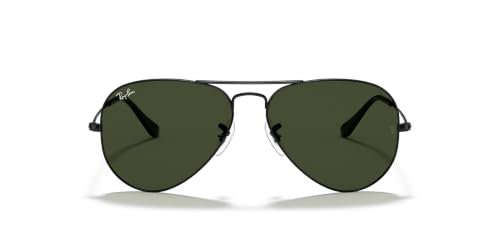
RB3025 Classic Aviator Sunglasses, Black/G-15 Green, 58 mm

Unisex RB3026 Aviator Large Metal II Aviator Sunglasses

Unisex RB3136 Caravan Square Sunglasses, Gunmetal/G-15 Green, 55 mm

Unisex RB4105 Folding Wayfarer Square Sunglasses

Unisex RB4105 Folding Wayfarer Square Sunglasses, Matte Black/G-15 Green

RB3016 W0365 49MM Black On Gold/G-15 Green Square Sunglasses for Men…

RB3016 W0366 49MM Tortoise On Gold/G-15 Green Square Sunglasses for Men…